An Idea That Once Sounded Like Science Fiction
For decades, the idea of humans directly connecting their brains to computers sounded like pure science fiction. Concepts like brain chips, digital consciousness, and merging humans with machines belonged mostly to futuristic movies, cyberpunk novels, and conspiracy theories.
Today, however, that conversation is becoming very real.
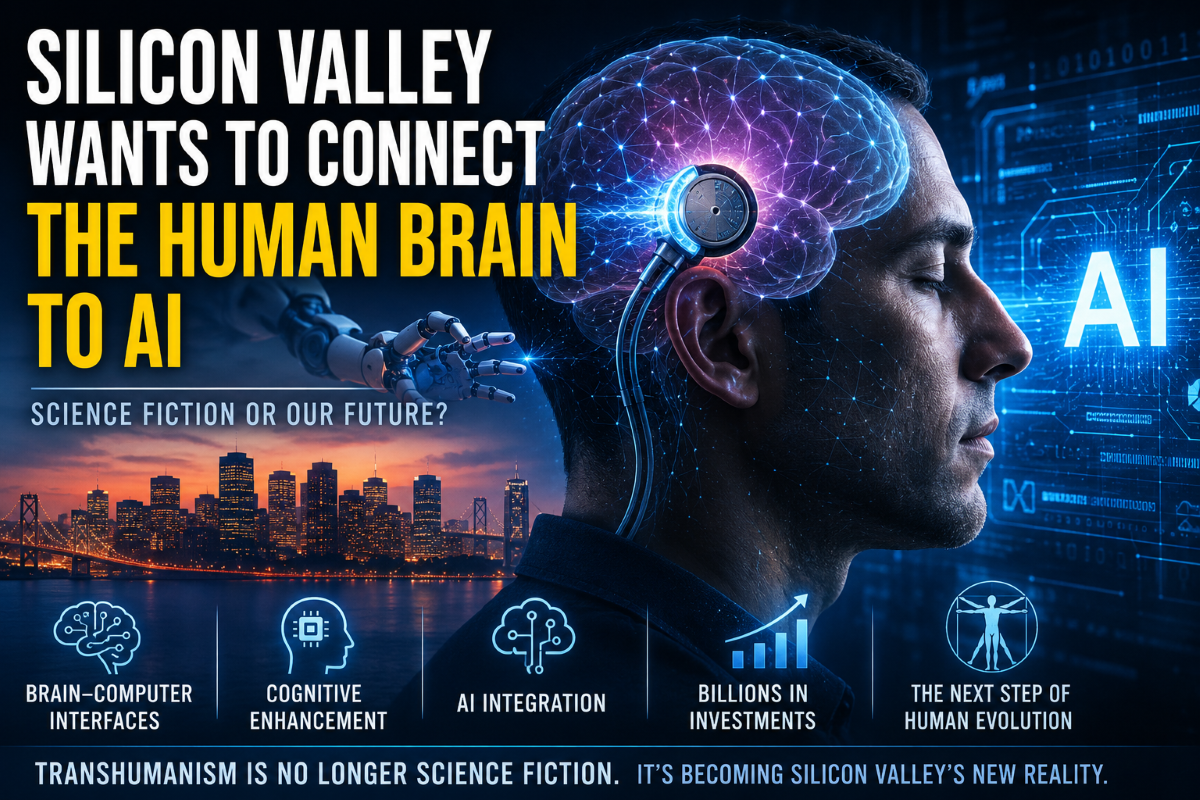
Across Silicon Valley, a growing number of AI companies, investors, and neurotechnology startups are openly discussing a future where the human brain could be directly linked to artificial intelligence systems. What once sounded extreme is now becoming part of serious business strategies, billion-dollar investments, and long-term technological planning.
From AI Assistants to “Upgrading” Humans
The movement behind these ideas is known as transhumanism. It is a philosophical and technological belief that humans can use advanced technology to improve their physical and mental abilities.
That includes extending human lifespan, enhancing intelligence, improving memory, and even creating direct communication between the brain and computers.
For years, these ideas were considered fringe topics, even inside the tech industry. But the rapid growth of generative AI has completely changed the discussion. As artificial intelligence becomes more powerful, some tech leaders now believe humans may eventually need to integrate with AI systems in order to keep up.
In other words, the conversation is no longer just about using AI tools. It is about transforming humans themselves.
Neuralink Is No Longer Alone
The most famous example is Neuralink, the company founded by Elon Musk. Neuralink is already testing brain implants designed to help humans interact directly with computers using neural signals.
Neuralink is no longer viewed as an isolated experiment.
Dozens of startups and investment funds are pouring billions of dollars into technologies focused on brain-computer interfaces, AI interpretation of neural activity, cognitive enhancement, and digital memory systems.
Some companies are developing systems capable of translating brain activity into commands. Others are researching AI that can analyze emotions, thoughts, and neural patterns in real time.
While many of these technologies are still in early stages, the level of investment shows how seriously Silicon Valley is taking this future.
Fear of Superintelligent AI Is Changing Everything
One major reason behind the rise of transhumanist thinking is fear.
Many AI researchers and tech executives believe artificial intelligence could eventually surpass human intelligence in most areas. This hypothetical future is often called “superintelligence.”
For some people inside Silicon Valley, merging humans with AI is becoming less of an option and more of a survival strategy.
Elon Musk has repeatedly said he views Neuralink as a way for humans to remain relevant in a future dominated by advanced AI systems. Similar ideas are now spreading throughout the tech world, especially among investors and futurists who believe AI development is accelerating faster than society can adapt.
Critics Warn About a Dangerous Future
Not everyone sees this future as exciting.
Critics argue that brain-enhancement technologies could create a new kind of technological inequality where wealthy people gain access to enhanced intelligence, memory, or cognitive abilities while the rest of society falls behind.
There are also massive concerns about privacy.
If technology eventually becomes capable of reading or interpreting human brain activity, it could create an entirely new category of personal data. After years of companies collecting our clicks, locations, searches, and conversations, the next step could be access to our thoughts and emotions themselves.
That possibility raises serious ethical questions about control, surveillance, and human freedom in the AI era.
Transhumanism Is Entering the Mainstream
Perhaps the most surprising part of this story is how quickly these once-radical ideas are entering mainstream technology culture.
Just ten years ago, concepts like uploading consciousness or connecting the brain to AI systems were often mocked, even inside Silicon Valley. Today, they are being discussed by some of the world’s most powerful investors, engineers, and AI companies.
That does not mean humans will soon become cybernetic beings overnight. But it does show how dramatically the tech industry’s mindset is changing.
AI Is Changing the Definition of Being Human
The rise of generative AI has created a much deeper philosophical debate than most people expected.
If artificial intelligence eventually becomes smarter than humans in many areas, what will it actually mean to be human in the digital age?
For some leaders in Silicon Valley, the answer is not drawing a line between humans and machines. It is erasing that line completely.
What once belonged to science fiction is slowly becoming part of real-world technology development. And whether people find it exciting or terrifying, one thing is becoming clear: the future of AI may not just change our devices or jobs.
It could change human nature itself.
The post Silicon Valley Wants to Merge the Human Brain With AI: Sci-Fi Fantasy or the Future of Humanity? appeared first on Women Daily Magazine.
https://ift.tt/4mAjT89
Comments
Post a Comment